

Editorials
The Garden
by Carlo Borloni
There are works of art that confront us with the world as it appears, and others that reveal the world as it feels. The Garden, by photographer Samantha Cavet, belongs decisively to the second category. It is a body of work that does not simply show flowers, or seasons, or fragments of nature; it maps the tender, unstable landscape of time itself.
Cavet’s images seem to rest at the exact point where perception becomes emotion, where the eye does not merely observe but participates. Her flowers are neither botanical studies nor metaphors imposed from the outside, they are moments. And moments, by their nature, are fragile.
At a first glance, these photographs appear serene, contemplative, almost meditative. But beneath their quietness lies a profound tension: the tension of something fleeting that insists on being felt before it disappears. Each image carries the weight of a second that will not return. In this, The Garden positions itself not as a celebration of nature’s permanence, but as a manifesto of its impermanence, its brief, luminous insistence on existing.
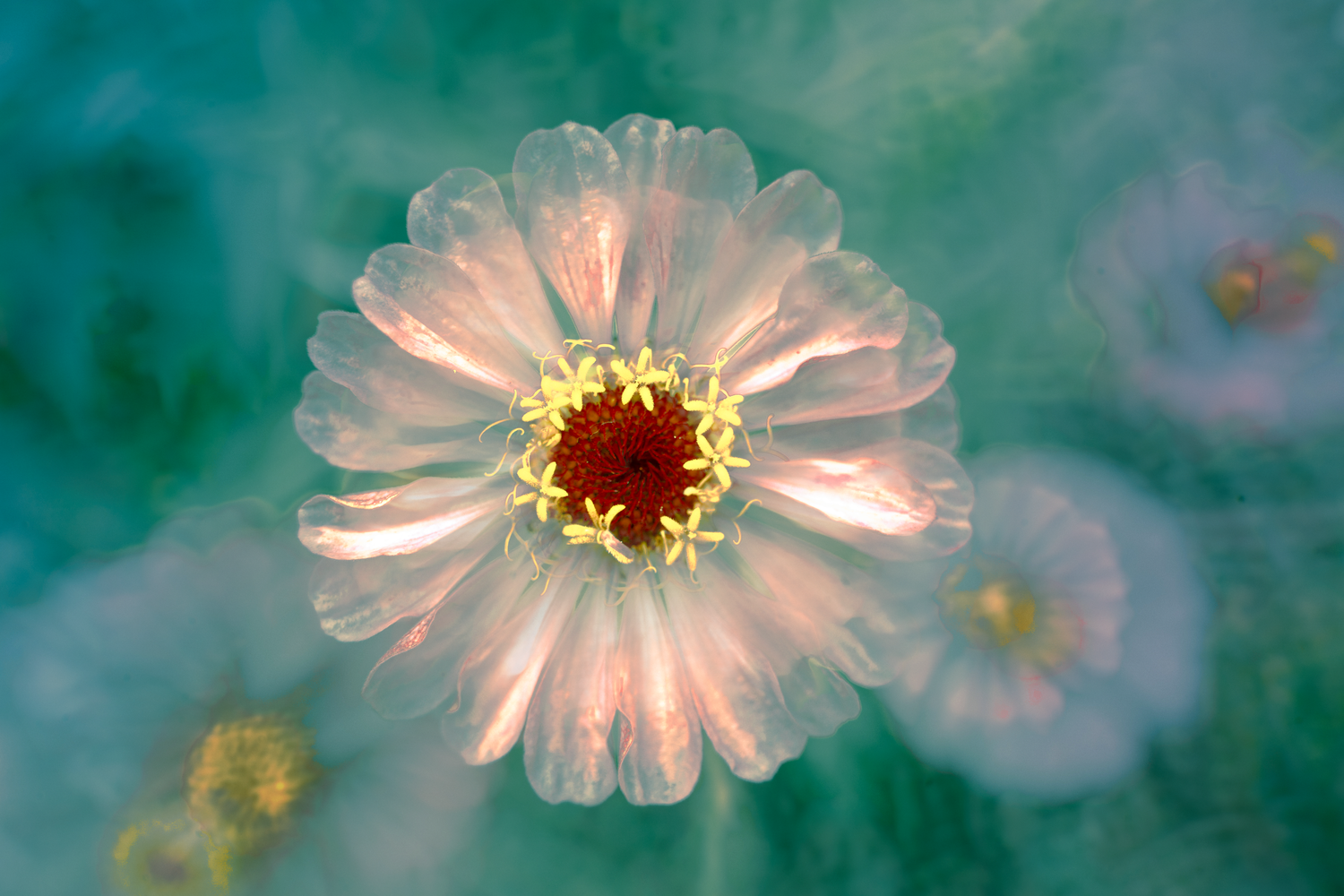
AURA, Samantha Cavet
The Silent Architecture of Time
Photography has always lived inside a paradox: it arrests what inevitably moves. In Cavet’s work, however, the aim is not to freeze time but to make its fragility visible. Her flowers are not captured at their peak, in the triumphant fullness that so often fills the visual culture of florals. They exist instead in delicate transitional states: opening and fading, trembling and resting, suspended between vitality and surrender.
This is the architecture of time that Cavet constructs, an architecture made of thresholds. The flowers she photographs are caught at the precise moment in which they are most vulnerable, which happens to be the moment in which they are also most revealing. They invite the viewer to contemplate the fleeting nature of beauty and the impossibility of holding onto anything without altering it.
This relationship between time and image recalls the writings of Roland Barthes, who spoke of photography as the “that-has-been”, a proof of something that existed once and will never exist again. Yet Cavet’s work suggests something more nuanced: not only that it has been, but that it was disappearing even as it was being seen.
Her garden is not eternal; it is an archive of endings.
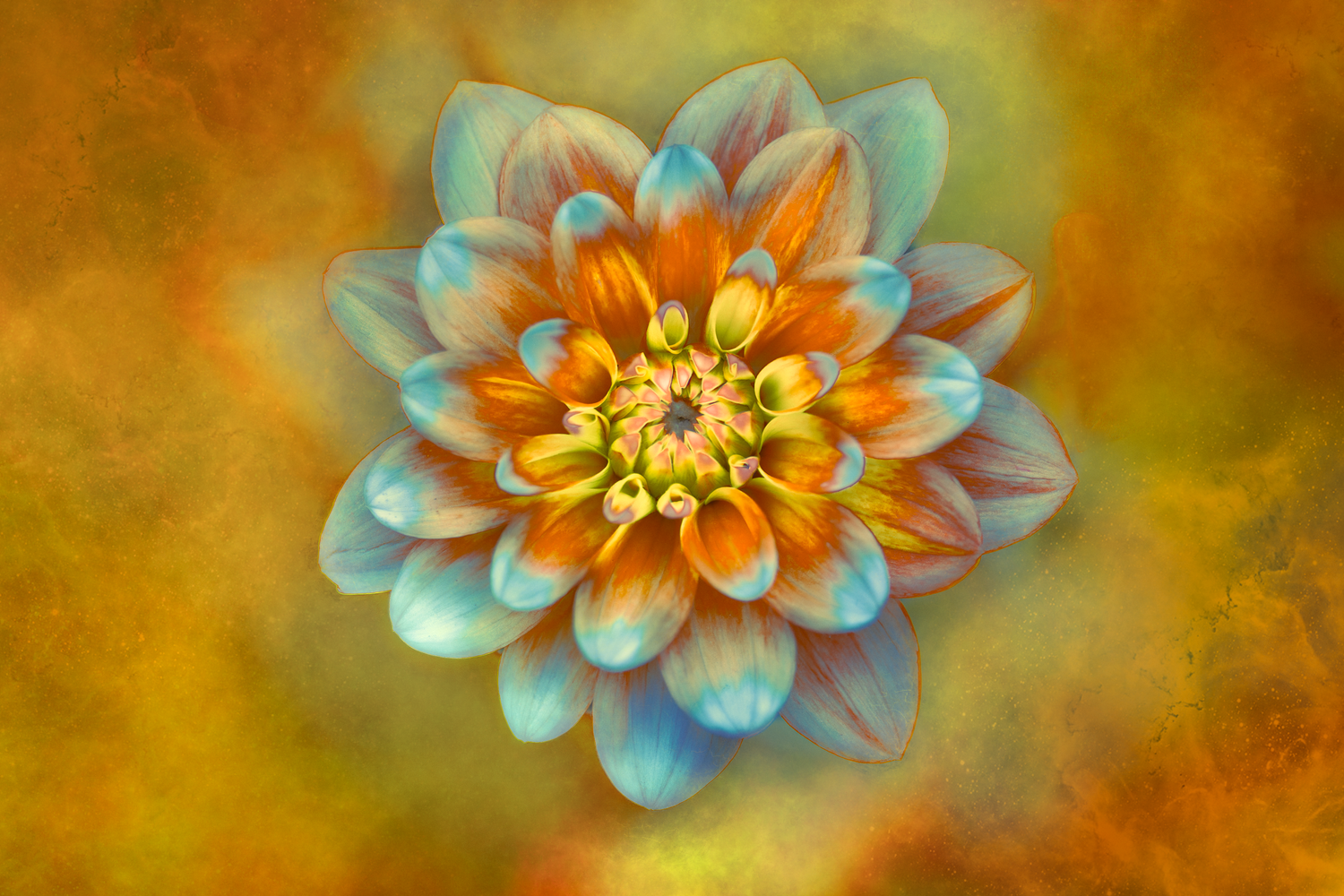
GALAXIA, Samantha Cavet
The Poetics of Attention
In contemporary life, we rarely look closely. The pace of our days encourages us to skim rather than observe, to collect impressions rather than inhabit them. Yet Cavet’s photographs demand attention of a different order. They compel slowness, proximity, surrender.
The macro perspective she adopts is not a technical choice but an ethical one. To come close to something so delicate is to acknowledge its vulnerability, and our own. Her flowers appear magnified not in size but in presence. They are not enlarged versions of the world; they are invitations to inhabit it more intimately.
The colors, soft, electric, fading, vibrant, carry emotional temperatures. Their textures whisper rather than declare. The compositions are deliberate but not rigid; they leave room for the viewer to breathe inside the image.
This poetics of attention becomes a quiet act of resistance in a world saturated with visual noise. Cavet asks us to look not quickly, not efficiently, but earnestly. To recognize that even within the smallest fold of a petal lies a complexity that exceeds our expectations.
The discipline of looking closely becomes a form of care.
And care, in Cavet’s work, is inseparable from time.
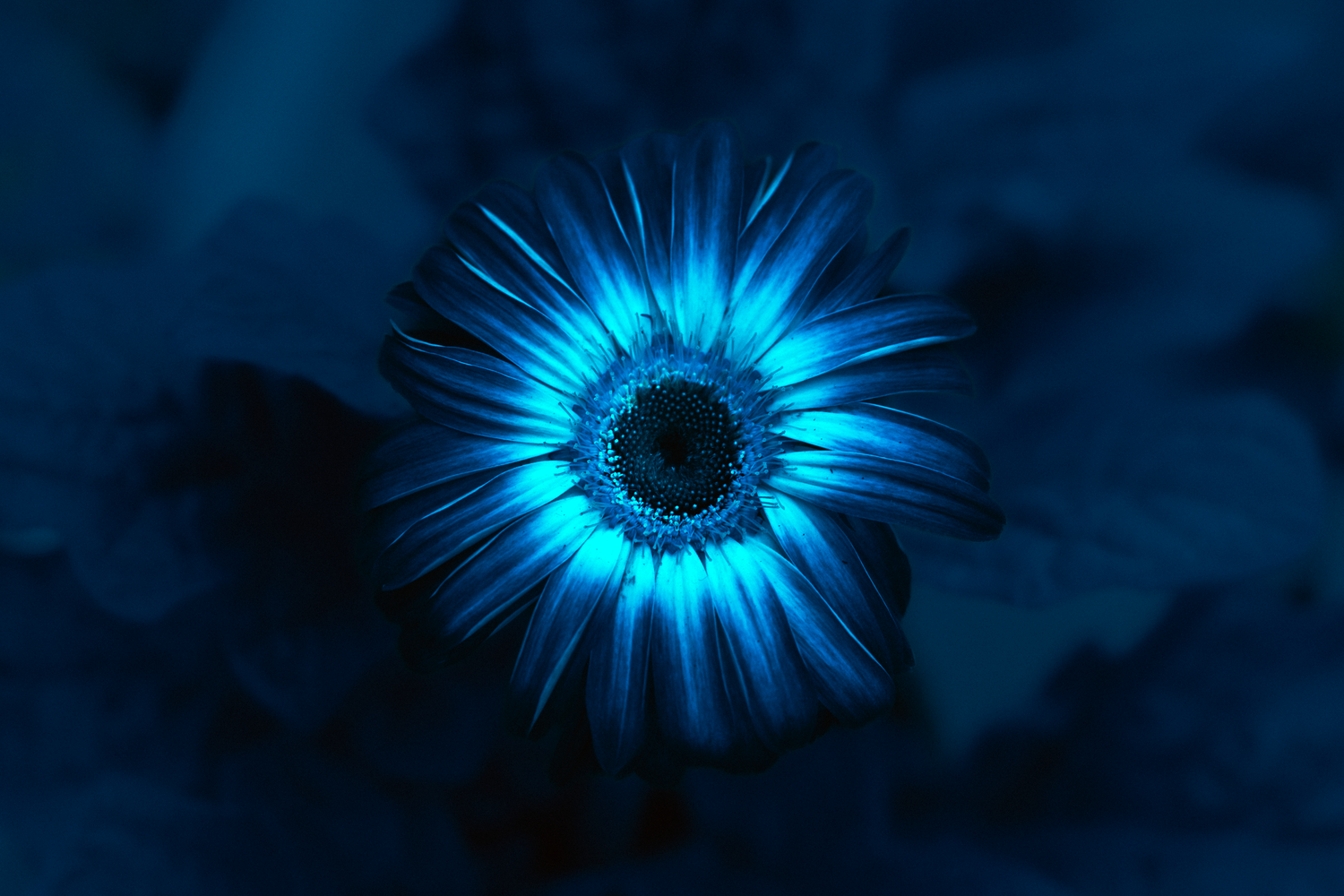
NOCTURNE, Samantha Cavet
A Journey Across Places, Light, and the Self
Though The Garden unfolds across different geographies, Madrid, Málaga, Almería, Argentina, the series is not defined by its locations. Rather, it moves like a journey of inner states mirrored by outer landscapes.
In the southern light of Spain, the flowers appear warm, contemplative, almost nostalgic. In the sharp brightness of Buenos Aires, they feel alive with a certain tension, as though vibrating between presence and disappearance. In the stillness of Patagonia, the images breathe with a quiet expansiveness, as if echoing the vast silence of the mountains.
Yet beneath these variations lies a continuous thread: a pursuit. Cavet photographs as one follows a calling, subtle, intuitive, persistent. She moves from place to place as though searching not just for flowers, but for fragments of herself scattered across geographies.
This is why the work ultimately escapes categorization as nature photography. It becomes, instead, a cartography of introspection. The flowers operate as emotional correspondences, each one reflecting a specific way of being in the world: uncertainty, wonder, fragility, renewal, fear, surrender, clarity.
The journey is geographical only on the surface; in its essence, it is existential.
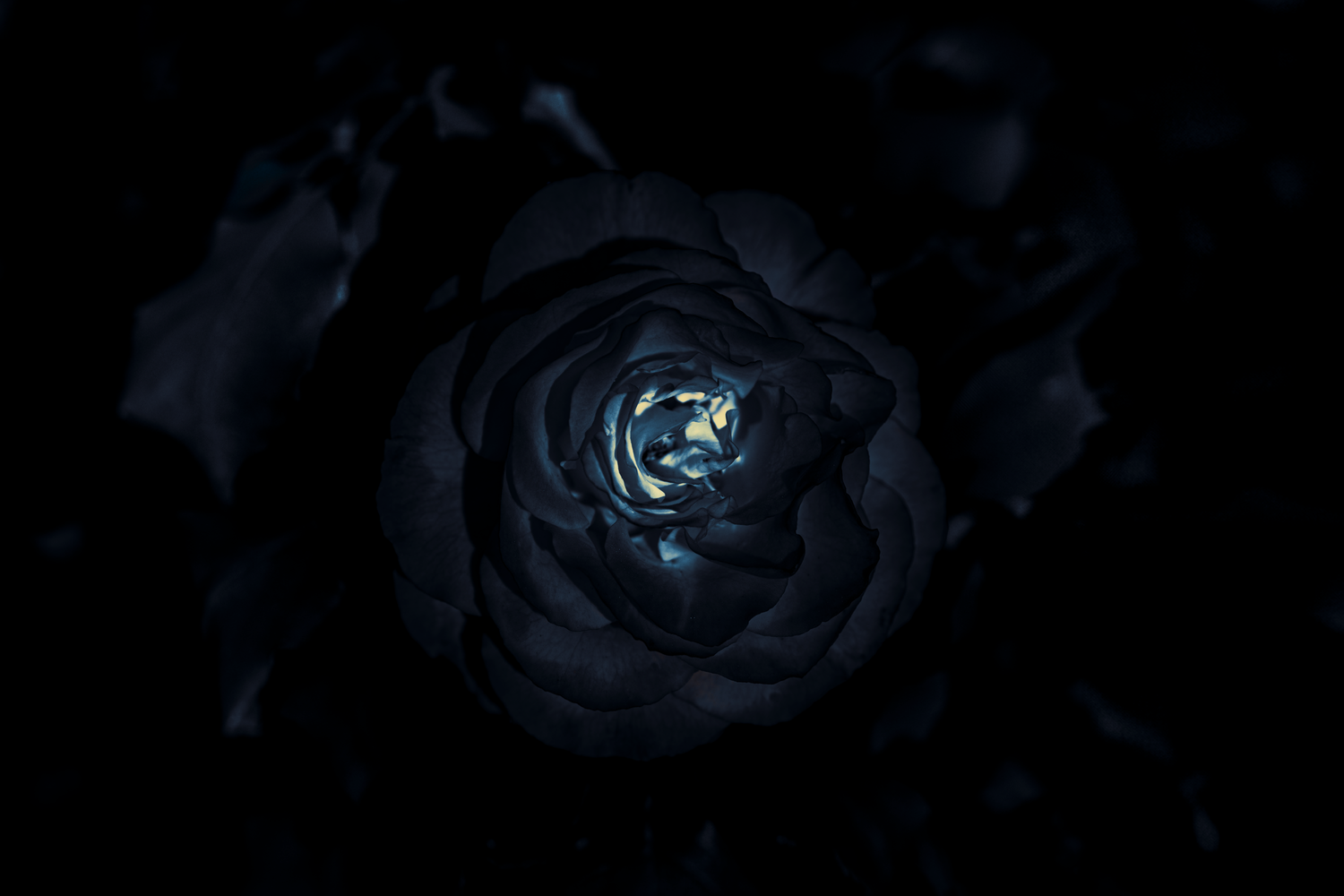
OBSCURA, Samantha Cavet
Transformations: The Flowers and the Self
Change is woven into every frame of The Garden. Not only the seasonal change that governs the life of a flower, but the internal change that shapes the life of an individual. Cavet’s images capture the moment in which a form is becoming something else, softening, collapsing, trembling toward a new state.
The photographer does not define this transformation; she listens to it. Her process is not imposed but discovered, shaped by encounters rather than intentions. There is humility in this approach, a willingness to be guided by the subject rather than to dominate it.
At a certain point, the series begins to read like a sequence of self-portraits. Not through representation, but through resonance. The flowers become emotional stand-ins, figures of transition. Each image suggests a question Cavet might have asked herself, a state she might have inhabited, a feeling she might have touched.
In this sense, The Garden functions as a mirror.
A mirror not of appearance, but of becoming.
This is why the series feels so intimate to the viewer. One does not simply observe these flowers; one recognizes oneself within them. Their fragility becomes our own. Their brief radiance echoes the moments in which we, too, feel most alive yet most vulnerable.
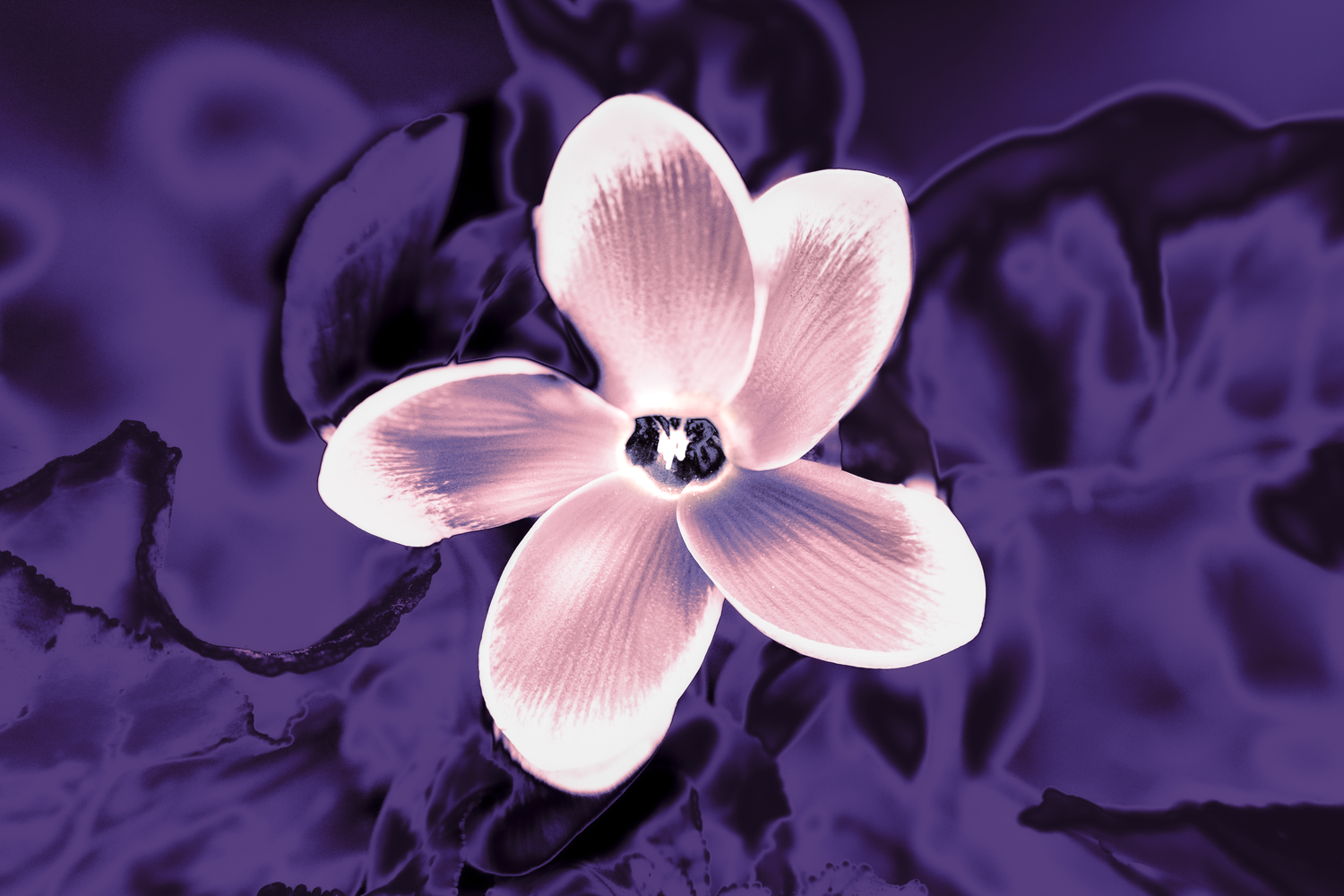
UMBRA, Samantha Cavet
Impermanence as a Form of Beauty
The Japanese aesthetic of mono no aware, the awareness of impermanence and its bittersweet beauty, finds a natural home in Cavet’s work. Her flowers are embodiments of transient existence. They bloom, they tremble, they fade. And in doing so, they remind us that beauty is not diminished by fragility; it is created by it.
Cavet does not attempt to rescue these moments from loss. She accepts that loss is part of the image. Her photographs hold both the presence and the disappearance in the same delicate tension. They acknowledge that the world is always changing, and that this constant change is the very source of its poignancy.
Time, in her images, does not march forward. It breathes.
It contracts, expands, hesitates, trembles.
It becomes almost tactile.
By tracing the life of flowers across continents and across seasons, Cavet traces the quiet changes that shape a human life. The project becomes not only a meditation on nature but on the inevitability of transformation. It reminds us that we are always in motion, even when standing still.
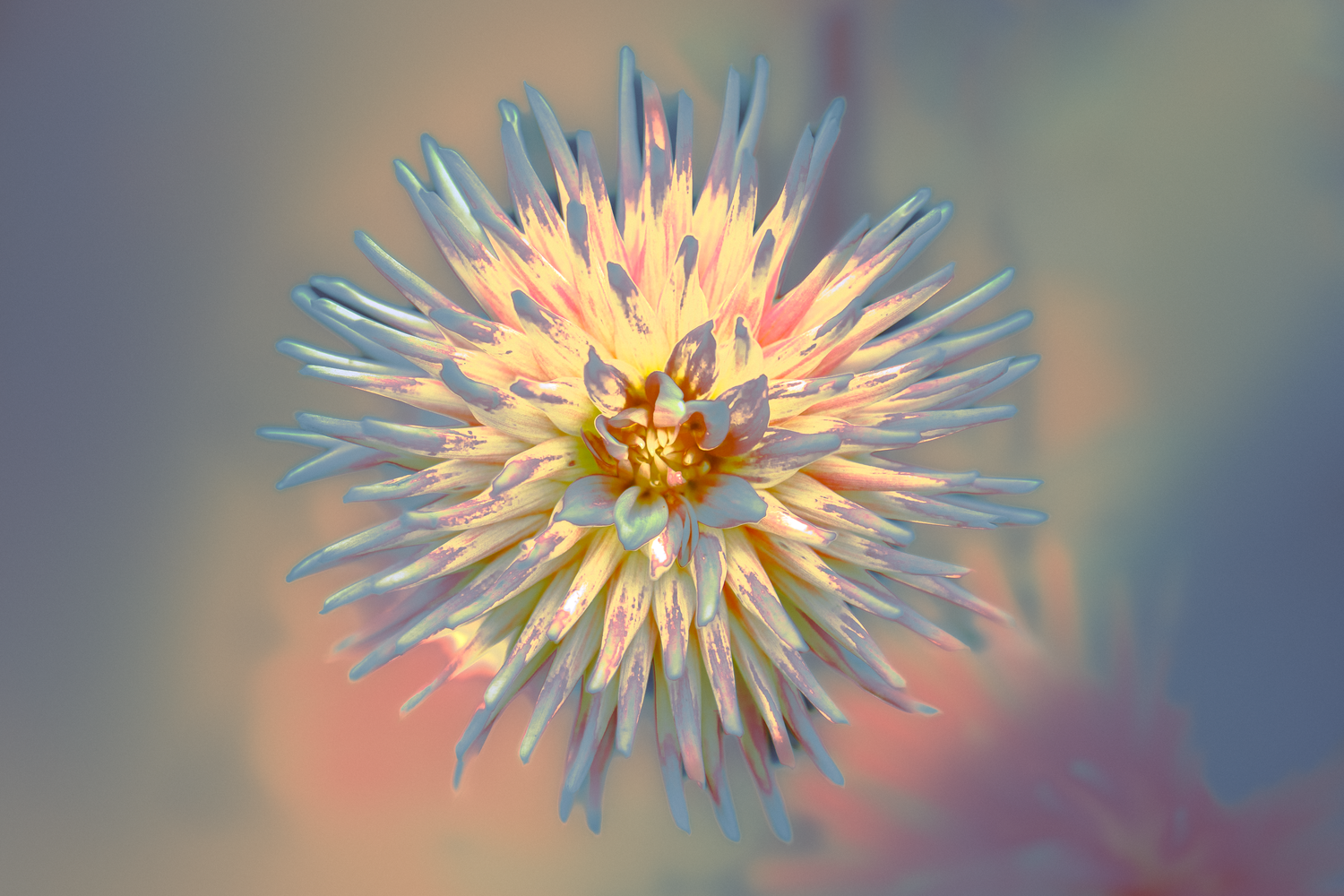
CHROMA, Samantha Cavet
The Garden as a Threshold
As the series grows, it reveals itself not as a collection but as a threshold. Each image is an invitation into a deeper form of perception. A way of seeing that dissolves the boundary between the world and the self.
To step into The Garden is to enter a space where fragility is not a weakness but a form of knowledge. The flowers, in their impermanence, teach us how to inhabit our own temporality with more tenderness. They ask us to consider the fleetingness of presence, the thinness of moments, the ways in which life unfolds in increments too small to measure.
Cavet’s work does not provide answers. It cultivates awareness.
It teaches us to remain in the in-between, where seeing becomes feeling.
Where time becomes a companion rather than an adversary.
In a world often dominated by noise, spectacle, and acceleration, The Garden returns us to the primacy of the pause. It suggests that within the smallest detail lies a universe, and within the universe, a fleeting chance to understand ourselves.
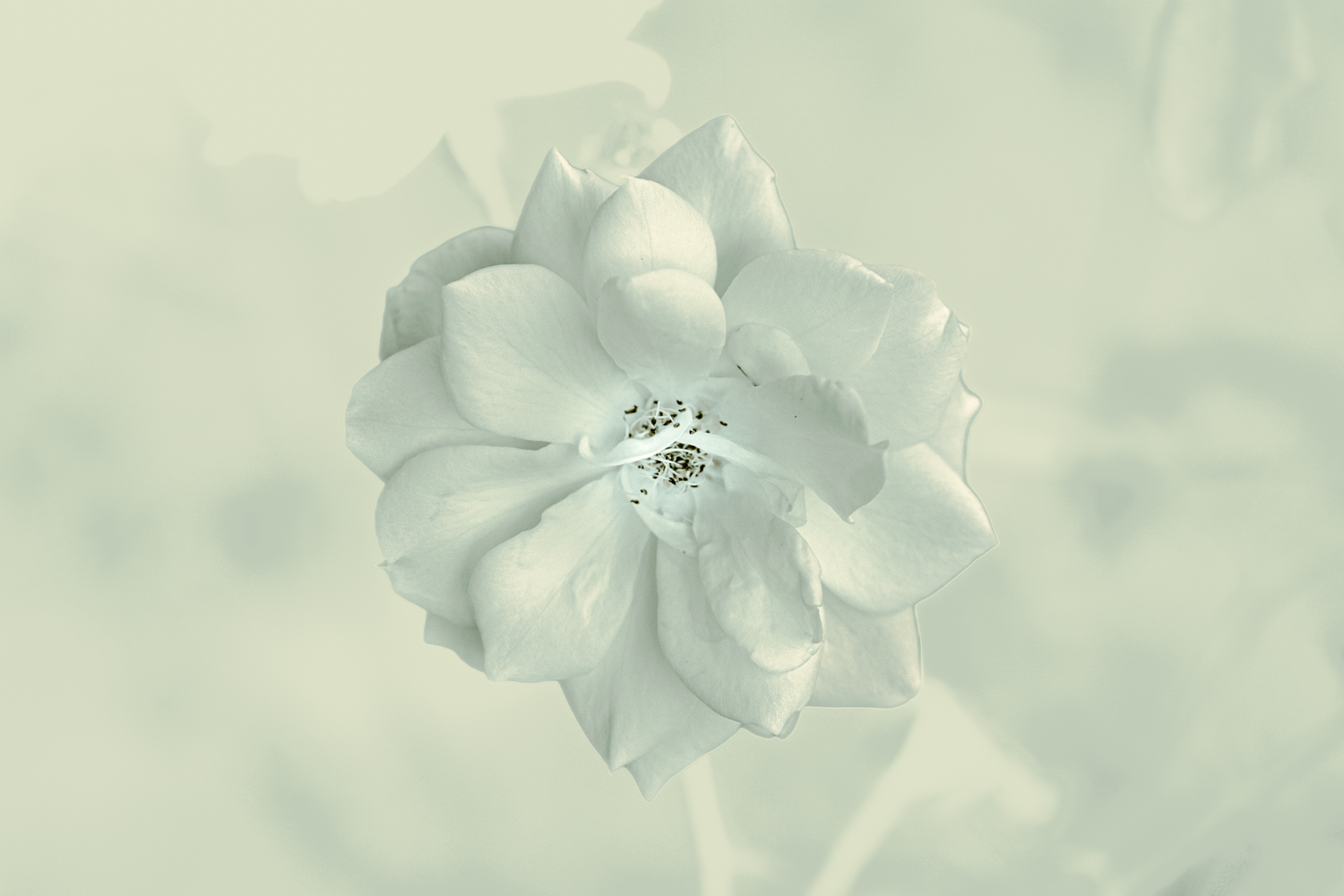
ORIGIN, Samantha Cavet
Personal Dedication
There are collections that I curate, and there are collections that touch something deeper, something private, something unspoken. The Garden belongs to this second realm for me. It arrives in a moment of my life in which time feels particularly fragile, particularly vivid, and its images echo thoughts I, too, carry quietly: that beauty is brief, that presence is precious, that transformation is inevitable, even when it frightens us.
Samantha’s flowers reminded me to slow down.
To look closer.
To feel the world without rushing through it.
They reminded me that fragility is not a boundary but an opening,
and that in the delicate life of a flower, we often find the most honest reflection of ourselves.
Curating this series has not only been an honor; it has been a companion.
A reminder that even in our own seasons of uncertainty, something luminous waits to bloom.
Carlo Borloni
Sign up for our newsletter to keep up with the latest news from NINFA
Sign up for our newsletter to keep up with the latest news from NINFA


Write us at: info@ninfa.io, or click here if you need support
Copyright © 2026 Ninfa Labs - 12094240962 - All rights reserved